Debt-for-nature swaps: A lasting investment in nature and people
© Day's Edge Productions / WWF-US
Key takeaways
- Tropical forests are essential for the health of our planet, yet their future is at risk without funding for their long-term protection.
- Debt-for-nature swaps—as seen in Peru and Colombia—balance local communities’ economic needs with conservation priorities.
- Congress is now considering bipartisan legislation that would renew the Tropical Forest and Coral Reef Conservation Act (TFCCA), a program that has unlocked innovative financing for conservation through debt-for-nature swaps for more than 25 years.
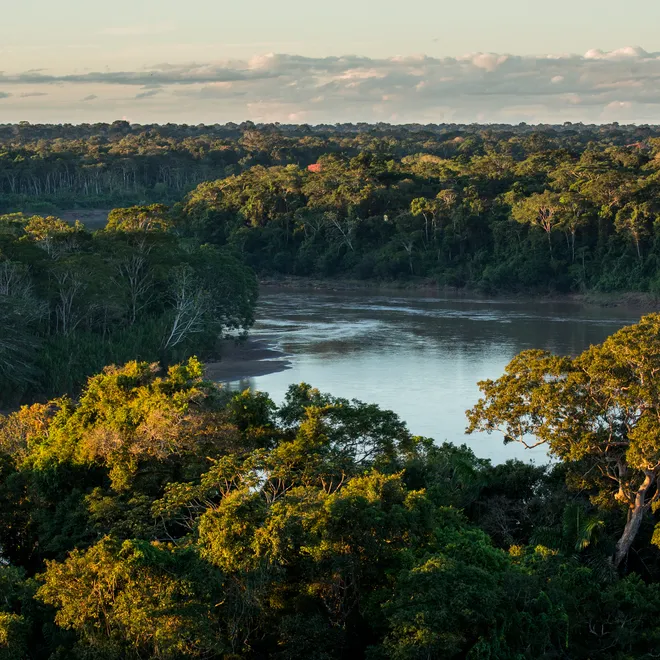
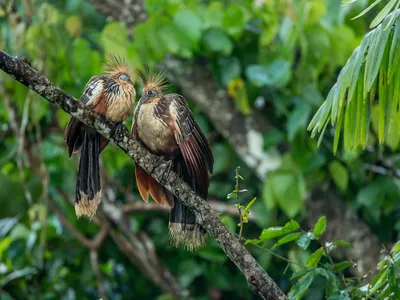
Tropical forests are among Earth’s most important natural treasures. They house most of the world’s biodiversity on land, help mitigate climate change, and provide livelihoods for local communities and Indigenous peoples who’ve called them home for centuries.
Yet too often, protected areas with tropical forests lack sustained funding for successful long-term conservation. One way to bridge the gap has repeatedly proven successful over more than 25 years to balance economic needs with conservation priorities: debt-for-nature swaps.
What are debt-for-nature swaps?
Congress formally established a program for debt-for-nature swaps, which allow countries to refinance their debts in exchange for redirecting funds toward conservation, in 1998 with the passage of the Tropical Forest Conservation Act. Lawmakers renamed it the Tropical Forest and Coral Reef Conservation Act (TFCCA) in 2019 to include an expansion of countries with coral reefs and mangroves.
The agreements made through this law in partnership with governments and leading conservation organizations are on pace to invest over $380 million for projects to conserve critical tropical forests and coral reef ecosystems in 14 countries and counting.
Tom Lovejoy, WWF's first chief scientist who touched the work of many organizations, is credited among others for imagining the concept of debt-for-nature swaps in the 1980s.
“Tom’s advice was always to, ‘think of the whole.’ From the very beginning, the best debt-for-nature swaps did exactly that—considered the whole of each place, from the ecosystem and economy to the local and Indigenous communities and local politics. Debt-for-nature-swaps are more than an innovative financial mechanism, they are a means to keep the whole intact,” WWF-US CEO Carter Roberts said at a 2024 event commemorating the TFCCA’s 25th anniversary.
© Day's Edge Productions / WWF-US
Protect the Amazon and tropical forests
The health of tropical forests shapes your daily life—including food, climate, and the economy. But these forests are disappearing at an alarming rate. Ask Congress to protect the tropical forests that make our lives possible.
Act NowWhat are some examples of debt-for-nature swaps?
© Day's Edge Productions / WWF-US
© Days Edge Productions / WWF-US
Peru
In June 2002, the US and Peruvian governments, supported by WWF, Conservation International, and The Nature Conservancy, signed a groundbreaking $14 million debt-for-nature swap agreement in exchange for funding dedicated to the preservation of 27.5 million acres of tropical forests.
Efforts from this debt-for-nature swap helped reduce some of the threats to critical forest ecosystems posed by unsustainable logging and agricultural land conversion. For instance, a swap-supported grant undertaken by Pronaturaleza, a Peru-based nongovernmental organization (NGO), provided legal support to stop land poachers engaged in unlawful logging in the Bosque de Pómac Historic Sanctuary.
Two decades after the first collaboration in Peru, WWF partnered with The Nature Conservancy, the Wildlife Conservation Society, Conservation International, and the US and Peruvian governments in September 2023 for a debt swap agreement that will reduce Peru's debt payments to the US government by over $20 million over the next 13 years.
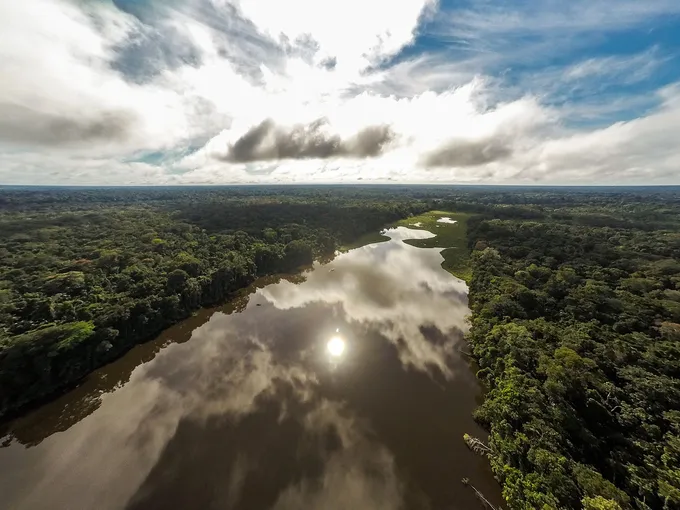
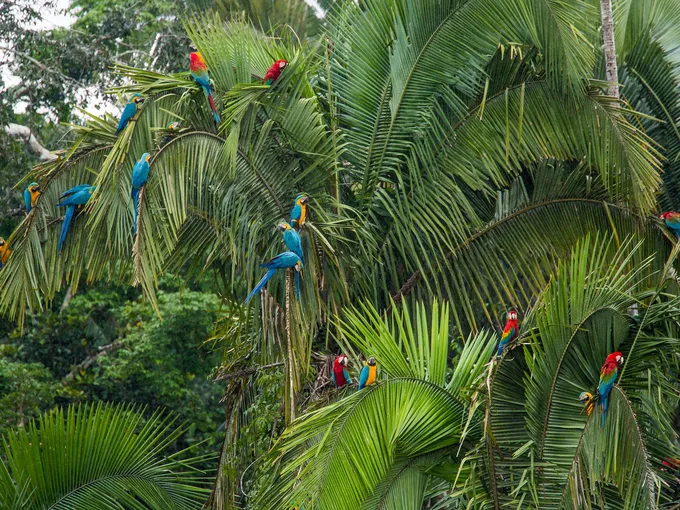
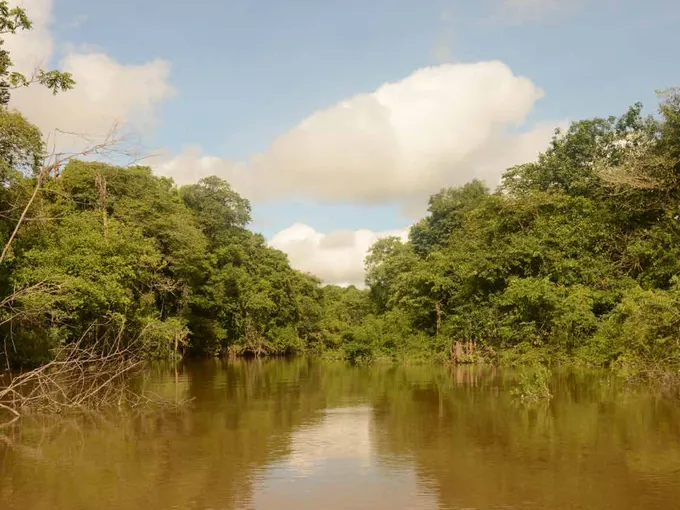
The swap unlocks new financing to protect the Peruvian Amazon rain forest—which covers 60% of the country. It will also bolster Peru’s Natural Legacy initiative (Patrimonio Natural del Perú), which supports the conservation of some 16 million hectares through the innovative Project Finance for Permanence (PFP) financing approach and the livelihoods of local communities in the region with sustainable natural resource management.
© David Rugeles / Fondo Accion
© David Rugeles / Fondo Accion
Colombia
A 2004 debt-for-nature swap supported by WWF, The Nature Conservancy, and Conservation International established an agreement to reduce Colombia's debt to the US by over $10 million for 12 years in exchange for funding local conservation projects to protect tropical forests.
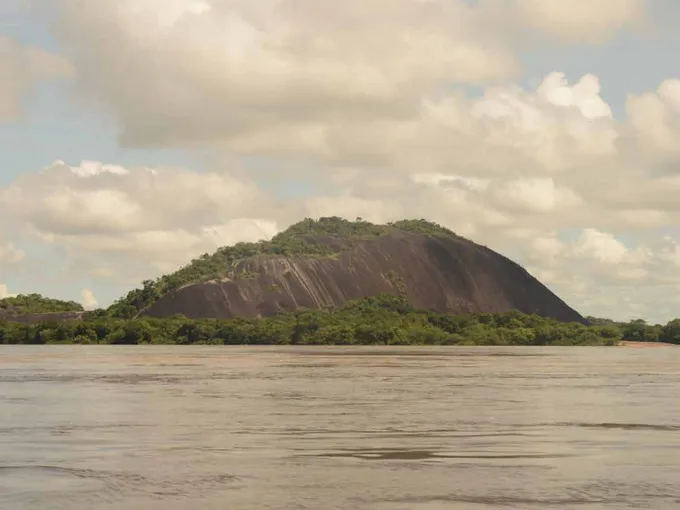
Regions in Colombia benefiting from this swap included forests in the El Tuparro Biosphere Reserve in the Orinoco River Basin, the Serranía de los Yariguíes region in Santander, and the Andean Corridor of Oak Forests.
A major part of protecting these important forest ecosystems is ensuring that local communities have lasting livelihoods. For example, coffee growers in Yariguíes, with support from the National Federation of Coffee Growers (Federación Nacional de Cafeteros), achieved a Rainforest Alliance certification that confirms high sustainability standards.
What’s next for debt-for-nature swaps?
Debt-for-nature swaps have endured with longstanding bipartisan support because environmental security is essential for human well-being.
Congress last renewed the TFCCA in 2021 for five years.
Congress is now considering bipartisan legislation led by Sens. Chris Coons (D-DE) and John Curtis (R-UT) to reauthorize the program and continue this legacy of unleashing innovative financing for conservation impact.
“The introduction of legislation to reauthorize the Tropical Forest and Coral Reef Conservation Act is an important step toward unlocking innovative financing for the world’s most vulnerable tropical forests and coral reef ecosystems,” said Kerry Cesareo, senior vice president for forests and freshwater at WWF, in a press release. “By strengthening this proven approach, we can help nations reduce debt burdens while investing in the natural systems that protect communities, support biodiversity, and promote our prosperity. We welcome this bipartisan commitment to solutions that deliver lasting environmental and economic benefits.”
By Cristina Marcos
Learn more about debt-for-nature swaps:
Nature Breaking Podcast: A Conversation with WWF’s Esteban Brenes About the TFCCA